Shields of the Republic: The Triumph and Peril of America’s Alliances
by Mira Rapp-Hooper (Harvard University Press, 272 pp., $28)
American power is based on a paradox. There has never been a more prosperous and powerful country in the history of the world, but the security and prosperity of the United States depend on the cooperation and good will of allied nations. This paradox is implicit throughout Mira Rapp-Hooper’s concise and authoritative case for restoring these American alliances in her new book, Shields of the Republic: The Triumph and Peril of America’s Alliances.
The book covers Cold War and post-Cold War alliance arrangement in almost exactly equal amounts. The author weaves together international relations theory, international law, and history to explain the evolution of alliance logics over time and across regions. While Rapp-Hooper nods briefly to America’s critical alliance with France during the Revolutionary War, her analysis truly begins at the end of World War II, when U.S. leaders realized that the country’s isolationist, anti-foreign entanglement prewar stance was too risky for an increasingly globalized world.
Read the full book review at American Purpose.
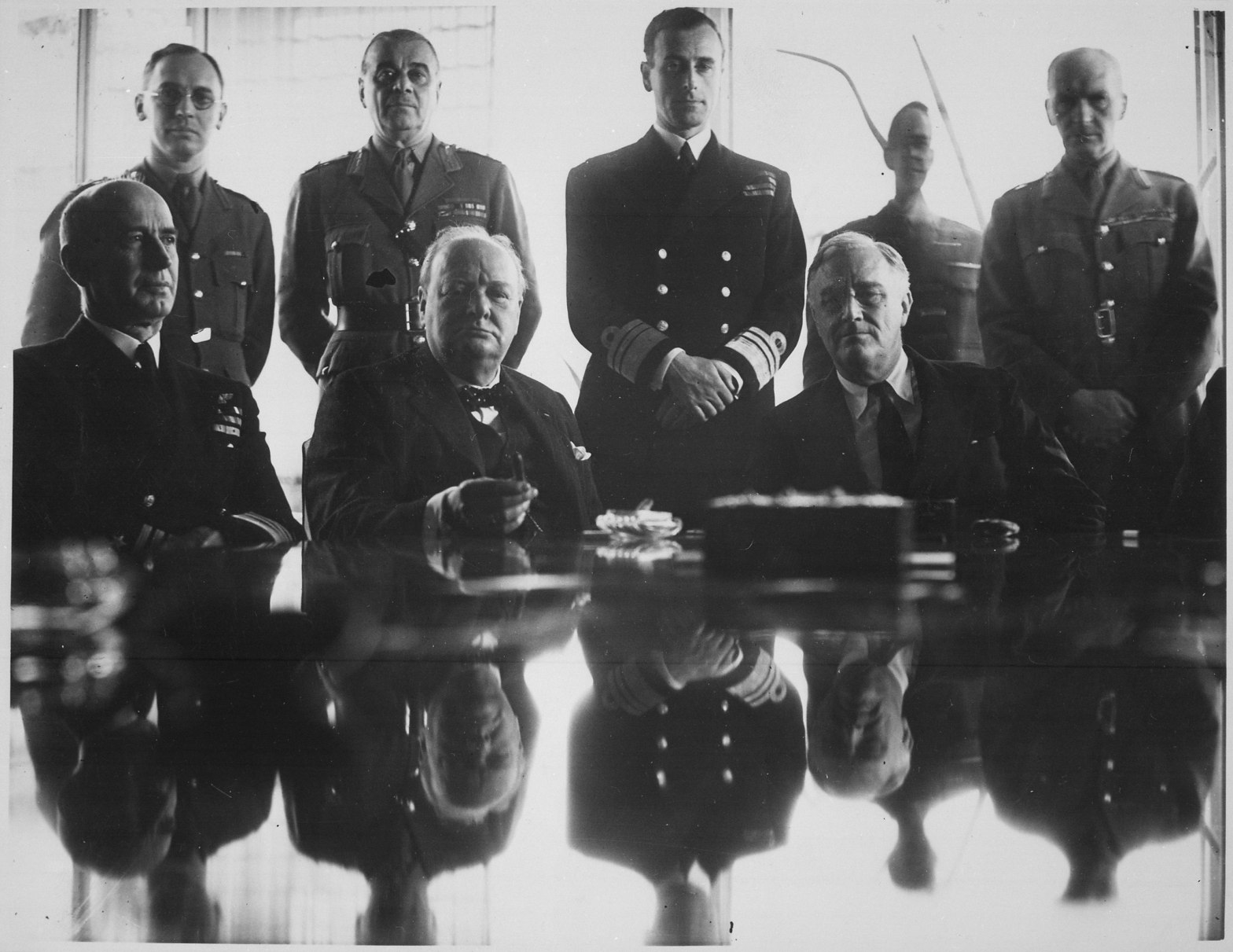
Image Source: National Archives and Records Administration. “Allies’ grand-strategy conference in North Africa. Admiral E. J. King; Mr. Churchill; President Roosevelt; Standing, Major General Sir Hastings Ismay; Lord Louis Mountbatten; and Field Marshal Sir John Dill., 1943.” Accessed via Wikimedia Commons
 Nicholas J. Romanow