Does the “Good Fight” Exist? Ethics and the Future of War

Samuel Moyn, Humane: How the United States Abandoned Peace and Reinvented War, (Macmillan, 2021)


Can a “humane” war ever be fought? Or is such a question doomed to irrelevance by an innate contradiction in its terms? These are two of the driving questions in Samuel Moyn’s Humane, a polemic against the US-led march into an era of endless war.

Moyn’s exploration of these question leads him to conclude, in part, that efforts to make warfighting more ethical and less cruel have in turn made war more common and long-lasting. Moyn also sets his sights on the military establishment, castigating it for a long succession of abuses, cover-ups, and manipulations. Published as the US military continues its transition from the post-9/11 wars to an era of great power competition, Moyn’s book is a thought-provoking reflection on the evolution of ethical and legal considerations in the use of military force. Still, it poorly anticipates the ethical dilemmas that military officers will face today and tomorrow.

Read the full article at West Point’s Modern War Institute.

The Lessons of Reagan’s Pipeline Crisis for Competing with China

Co-Authored with Professor William Inboden, Executive Director of the Clements Center for National Security

President Joe Biden promised to restore good relations with allies after the friction and acrimony of the Trump years. It is one thing to avoid antagonizing allies, as President Donald Trump seemed to relish. But mobilizing them in a common cause is another matter altogether. The catastrophic U.S. withdrawal from Afghanistan caused European allies to openly question America’s competence and ability to lead. As the Ukraine crisis began to brew last fall, a common Western policy was hobbled by Germany’s reticence. Only once President Vladimir Putin actually launched his invasion did new German chancellor Olaf Scholz reorient his country’s policy on Russia and announce a program of defense spending unprecedented in the post-Cold War period.

However, notwithstanding the current transatlantic coordination on Russia sanctions and support for Ukraine (notable achievements that we applaud), Washington should not expect to find common ground with its allies and partners in Europe and even in Asia quite so easily in the event of a major security crisis with China. While policymakers and analysts debate whether America is in a “new Cold War” with China, the original Cold War offers cautionary lessons for managing alliances while confronting a hostile great power.

Read the full article at War on the Rocks.

Military Leaders Need the Liberal Arts

A liberal arts school; Officer Candidate School. These two places connote starkly different environments. One is associated with poetry readings and well-landscaped quads; the other evokes imagery of screaming drill instructors and lots of burpees. I had these experiences back-to-back, and while it was a startling juxtaposition, I now appreciate the synergy between these two programs as well as the important role the liberal arts play in the military profession.

On the surface, the environments of Officer Candidate School (OCS) and my alma mater, the University of Texas at Austin, could hardly be more different. OCS is a highly structured program in which every minute of a candidate’s day is pre-planned, and stress is a feature rather than a flaw of the training environment. Modern universities, however, are much more freewheeling. Actual attendance policies depend on the course instructor, and nearly everyone who attended college knows a classmate who made it semesters without seeing the inside of a classroom except for exam days. Indeed, some of the most formative activities for college students involve how they use unstructured idle time instead of formal training. And perhaps infamously, today’s universities take an opposite view of stress on students, seeking to eliminate stress when possible and provide ample resources to shelter students from too much of it.

Read the full article at the U.S. Naval Institute Proceedings.

Oh Lord, for Alliance!

Shields of the Republic: The Triumph and Peril of America’s Alliances
by Mira Rapp-Hooper (Harvard University Press, 272 pp., $28)

American power is based on a paradox. There has never been a more prosperous and powerful country in the history of the world, but the security and prosperity of the United States depend on the cooperation and good will of allied nations. This paradox is implicit throughout Mira Rapp-Hooper’s concise and authoritative case for restoring these American alliances in her new book, Shields of the Republic: The Triumph and Peril of America’s Alliances.

The book covers Cold War and post-Cold War alliance arrangement in almost exactly equal amounts. The author weaves together international relations theory, international law, and history to explain the evolution of alliance logics over time and across regions. While Rapp-Hooper nods briefly to America’s critical alliance with France during the Revolutionary War, her analysis truly begins at the end of World War II, when U.S. leaders realized that the country’s isolationist, anti-foreign entanglement prewar stance was too risky for an increasingly globalized world.

Read the full book review at American Purpose.

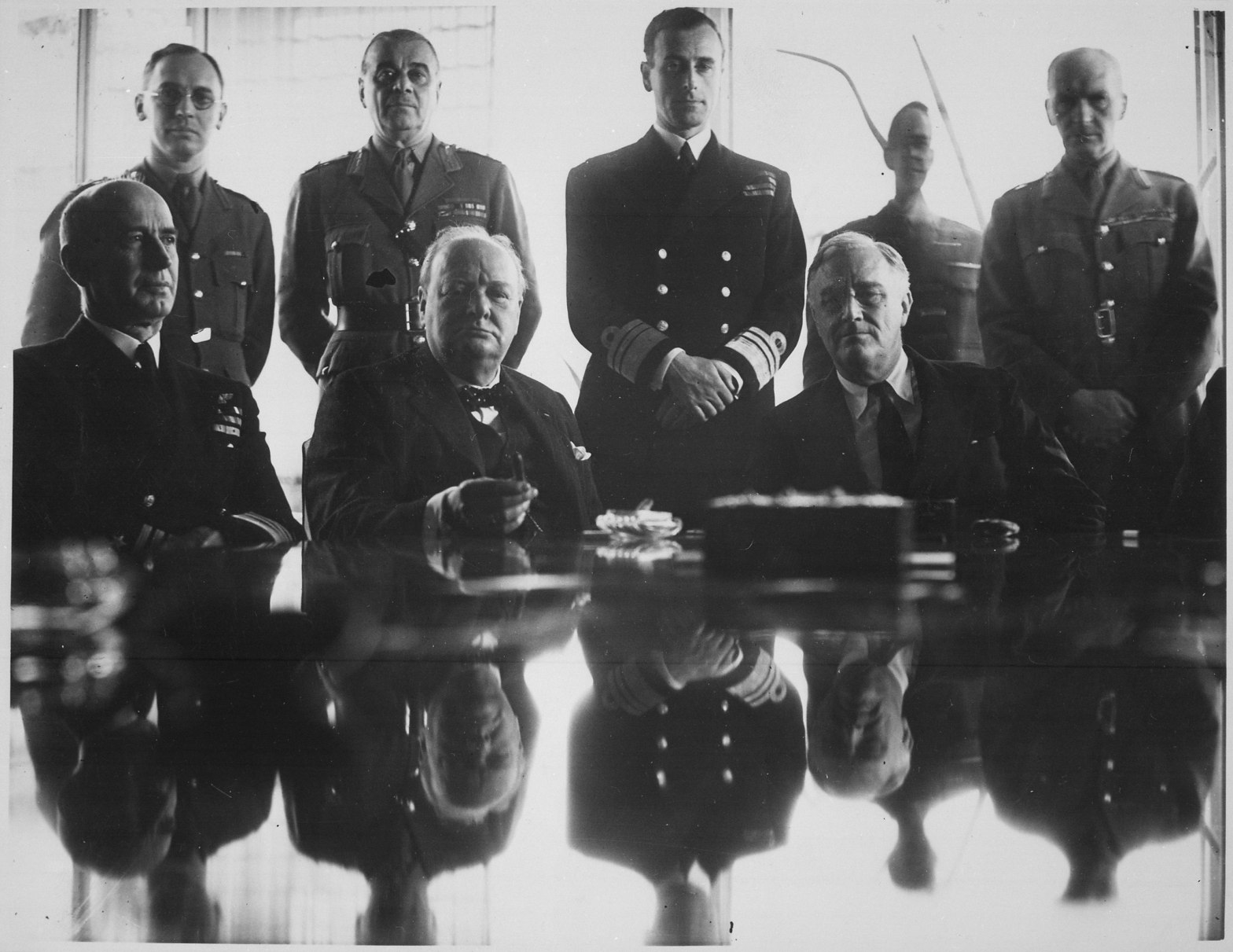
Image Source: National Archives and Records Administration. “Allies’ grand-strategy conference in North Africa. Admiral E. J. King; Mr. Churchill; President Roosevelt; Standing, Major General Sir Hastings Ismay; Lord Louis Mountbatten; and Field Marshal Sir John Dill., 1943.” Accessed via Wikimedia Commons

Much Ado (and to Do) About Illiberalism

America  has no permanent friends or enemies, only interests.” This Henry Kissinger quote is a perennial favorite of American realists, informing decades of American grand strategy. In recent years, from threatening to withdraw from NATO to praising Kim Jung-Un in search of a blockbuster nuclear deal, the Trump Administration ruthlessly implemented this adage, with the effect of alienating America’s traditional allies throughout the world. As the Biden Administration gets underway, many commentators see repairing the American alliance network as the 46th President’s biggest foreign policy challenge.

In response to the steady recession of democracy worldwide and the decay of American alliances, President Biden promised a “Summit for Democracy” to “strengthen our democratic institutions, honestly confront nations that are backsliding, and forge a common agenda.” This agenda will have a long list of objectives: preventing a conflict with China over territorial disputes in the “Three Seas” (East China Sea, South China Sea, and the Taiwan Strait), solidifying slow progress and preventing more state failure in the Middle East, and rolling back Russian meddling in former Soviet satellites and European affairs in general. [1]Some, including AHS’s Elbridge Colby and Robert Kaplan, have criticized the idea of building democracy-based alliances as a distraction that will prevent forging a broad coalition against China based upon common interests instead of common values. [2]

At first glance, this dilemma presents a classic trade-off between quality and quantity. However, the decisions to be made are not a simple country-by-country “yes vs no” choice on whether to pursue an alliance or not, but rather, the task before the Biden Administration is choosing which partnerships get prioritized before others. As liberal institutions are questioned at home and democracy steadily decays abroad, the long-term health of liberalism must take priority over short-term, fleeting efforts to gain a tactical advantage over an adversary. [3], [4] Increasing America’s wealth and power is not an end in itself; wealth and power are necessary inputs to securing the greater end of sustaining American self-government and economic prosperity while inching toward the triumph of liberty around the world. The United States is not the only state in the world that desires this outcome, so the United States must recommit to its liberal allies while also confronting the scourge of illiberalism that is festering within American partnerships.

Read the full article at The Hamiltonian.

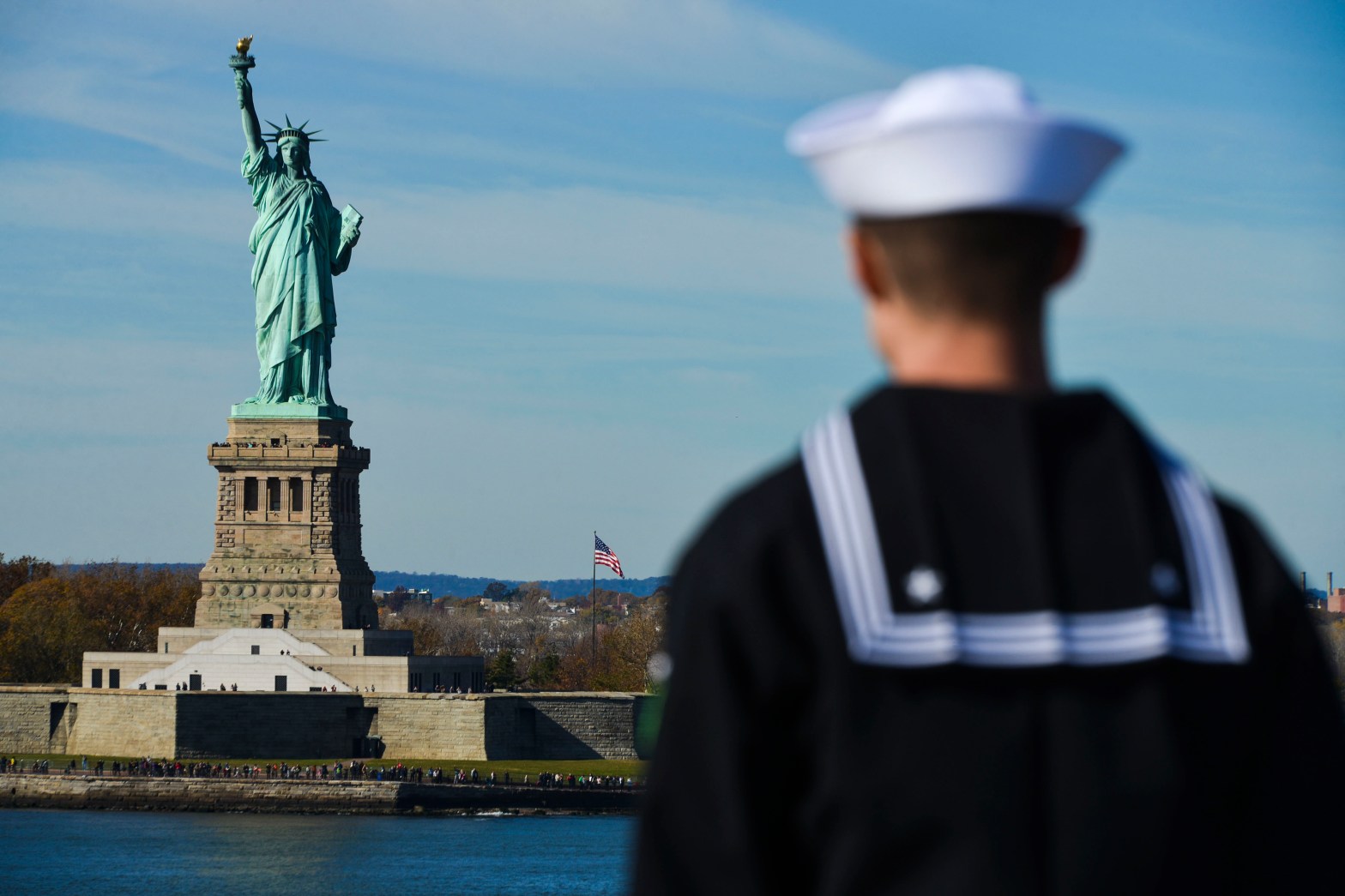
Image Source: U.S. Navy photo by Petty Officer 2nd Class Andrew Murray/Released, accessed via Wikimedia Commons

Security Concerns with China Limiting Student Learning

The college campus has become a battleground between the United States and China. Donations, research funding, and international students give colleges a much-needed financial and enrollment boost, but the connection to the Chinese government can also threaten academic freedom and, on some occasions, national security.

Fundamentally, universities exist to serve students and the public interest, and tension between the U.S. and China makes it harder for universities to train future leaders and inform the public through research.

Read the full article at the Martin Center for Academic Renewal blog.

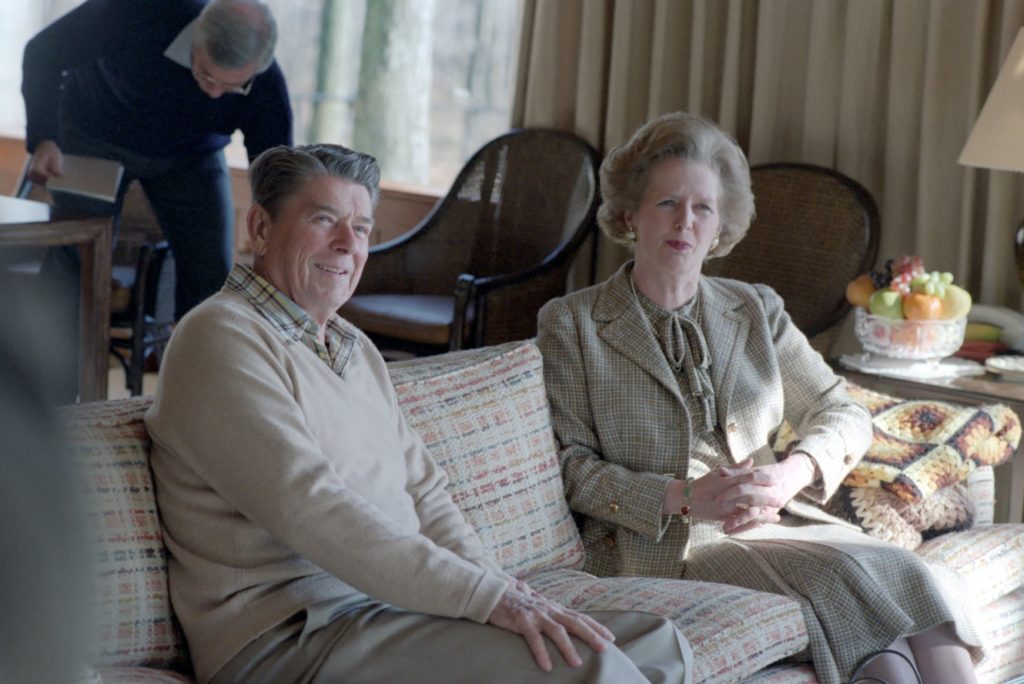
Image Source: Wikimedia Commons, shared with permission.

Why Anti-Military Sentiment on Campus is Often Misplaced

Image Source: Dept. of Defense/Public Domain. The appearance of U.S. Department of Defense (DoD) visual information does not imply or constitute DoD endorsement.

Co-Authored with James Mismash

Skepticism toward the military is easy to find on college campuses like the University of Texas at Austin; even in the absence of a nationally omnipresent anti-war movement as in the 1960s, anti-military student groups have thrived in recent years. However, college students who desire a just and sustainable global future would be wise to temper and redirect their criticism of the military toward elected leaders responsible for making policy.

The Pentagon is frequently blamed for the over-militarized foreign policy blunders of the last two decades. However, this overlooks the relationship between the U.S. Government and its military. Former Secretary of Defense Robert Gates observed that “the biggest doves in Washington wear uniforms.” Rather than being a cabal of jingoists, the military follows the President’s orders as overseen by Congress.

Read the full article at The Baines Report.

How to Wage an Ideological Conflict with China

Image Source: The Bulwark, photo originally by Ding Lin/Xinhua via Getty

Both the Trump and Biden presidential campaigns vied to outdo the other in being “tough on China.” The Trump administration declassified an intelligence assessment that the Chinese Communist Party favored Biden over Trump, and Biden responded with harsh words for both President Trump and Chairman Xi. While the House and the Senate are slated to be sharply divided in the next Congress, there is broad consensus on the need to confront China. But consensus can be hazardous for strategy, and policymakers should be wary so that the rush to confront China doesn’t sacrifice America’s values and interests.

The key question for any strategy to compete with China is: With our economy closely tied to an authoritarian power, our channels of communication infiltrated by surveillance technology and weaponized information, and the legitimacy of our liberal institutions questioned from within and without, how can the United States avoid an outright military conflict and remain a free and open society? Any strategy to confront China by mimicking its illiberal tendencies would be self-defeating.

Read the full article at The Bulwark.

The Dangers of Decoupling

Image Source: Journal of Sino-American Affairs

Co-Authored with Archit Oswal

Bipartisan consensus is a scarce occurrence in American politics, but when it comes to the future of U.S.-China relations, the debate seems settled. Both the Trump Administration and the Biden Campaign are battling to prove who is “tougher on China.” The emerging approach to China is termed “decoupling” and is an attempt to avoid the downsides of China’s economic strategy, such as industrial espionage, trade protectionism, and foreign manipulation. However, while China’s capabilities and intentions to undermine the United States are real, the strategic value of “decoupling” is over-simplified and overstated.

Read the full article at the Journal of Sino-American Affairs blog.

Becoming an American in 2020

Image Source: The Bulwark/Byron Smith/Getty Images

Just about every presidential election cycle, a handful of celebrities swear that they will quit the United States if their preferred candidate doesn’t win. Most seem to say they’ll move to Canada. Of course, the promises—or threats?—almost always turn out to have been hyperbolic.

This election year, I’m doing the reverse: I am a young Canadian who, after having spent much of my youth and early adulthood in the United States, has this year become an American citizen. I have no intention of giving up my love of hockey and poutine, but in mid-May, I pledged to “support and defend the Constitution of the United States against all enemies, foreign and domestic,” and collected my certificate of naturalization.

Read the full article at The Bulwark.